Trustworthy and Explainable AI
Leverage the rigor of logic and translate verified logic evidence into faithful, human-centered explanations for complex AI outcomes.
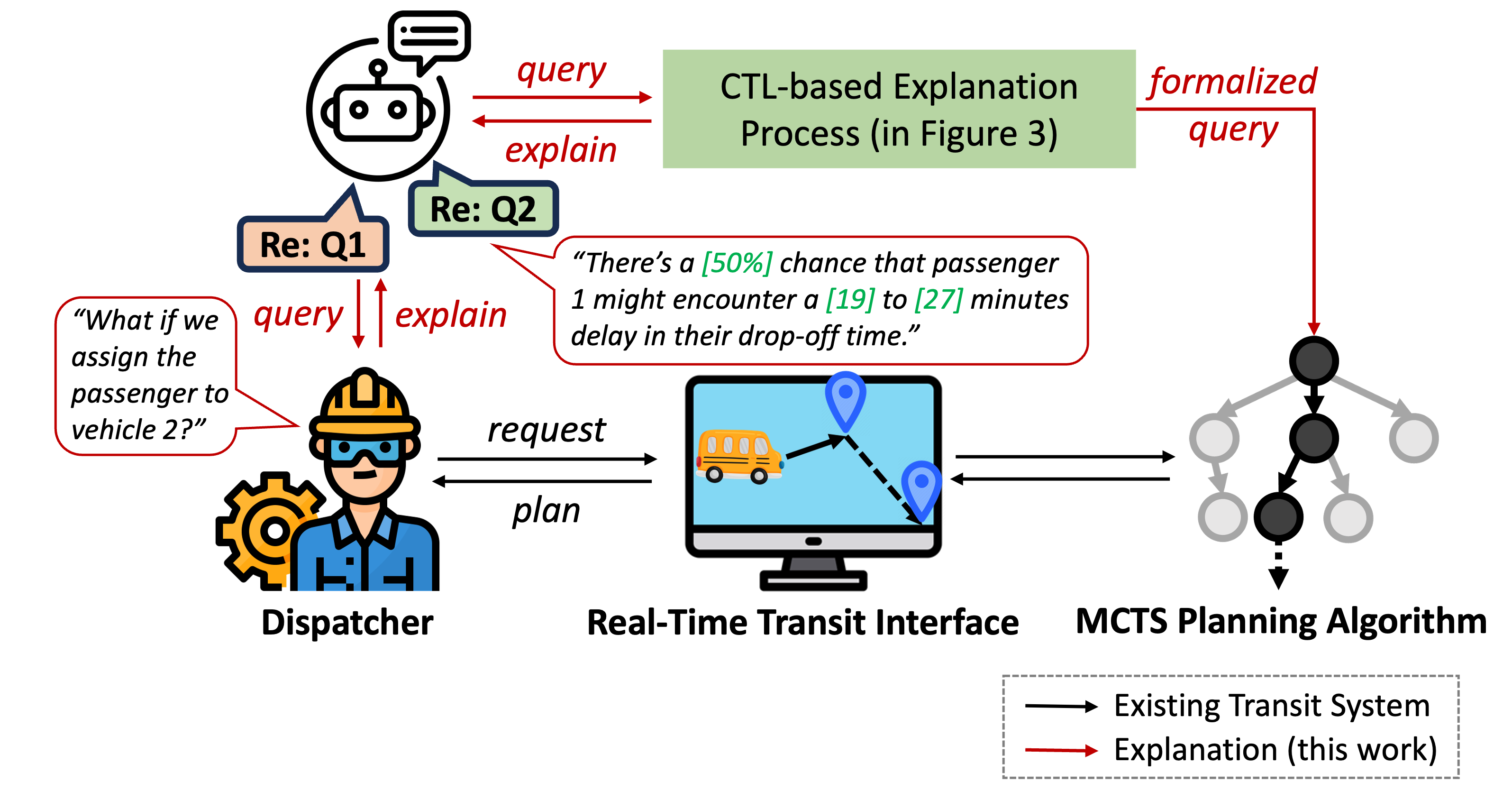
We developed a Computation Tree Logic (CTL)-based explainer for Monte Carlo Tree Search (MCTS) in sequential transit planning. The method converts user queries into formal logic specifications, evaluates them over the search tree using CTL semantics, and returns semantically grounded explanations.
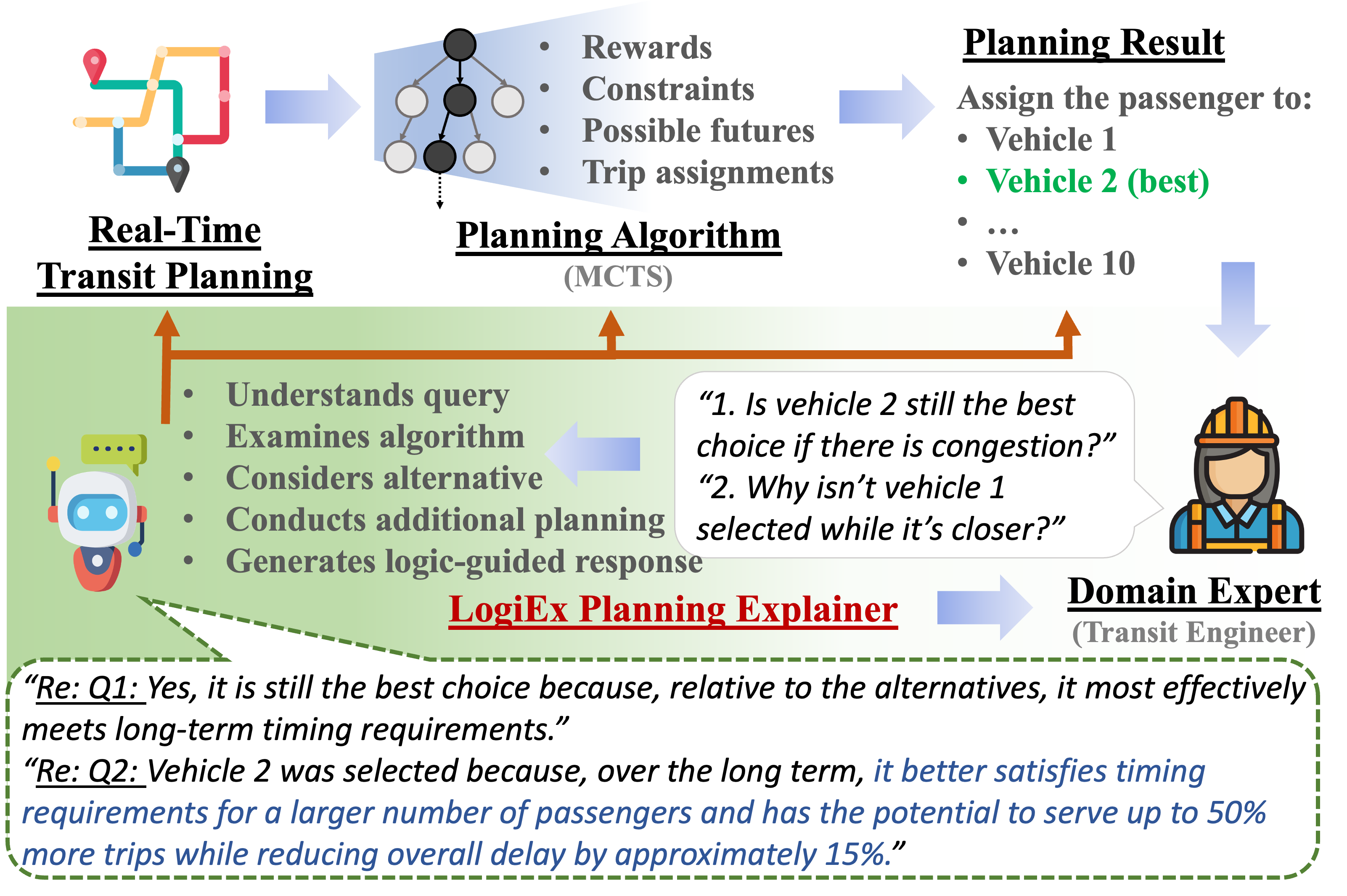
Building on this, we introduced LogiEx, a logic-integrated explanation framework that combines formal verification with large language models (LLMs) to interpret complex MCTS trees. LogiEx supports free-form queries, human-guided search exploration, and logic-grounded explanations, while ensuring faithfulness by validating responses against the underlying planning process.
My research further establishes a framework for reliable, verifiable, and human-centered explanations in complex planning systems across additional real-time domains. Future work will focus on deploying and evaluating this framework in collaboration with the Williamson County Department of Transportation, with the goal of addressing community concerns regarding school bus routing and scheduling decisions and assessing its effectiveness in real-world operational settings.
Related Publications