Formal Logic Enhanced AI and Deep Learning
How can formal specifications be integrated into learning-based AI to improve robustness, fairness, safety, and security in intelligent systems?
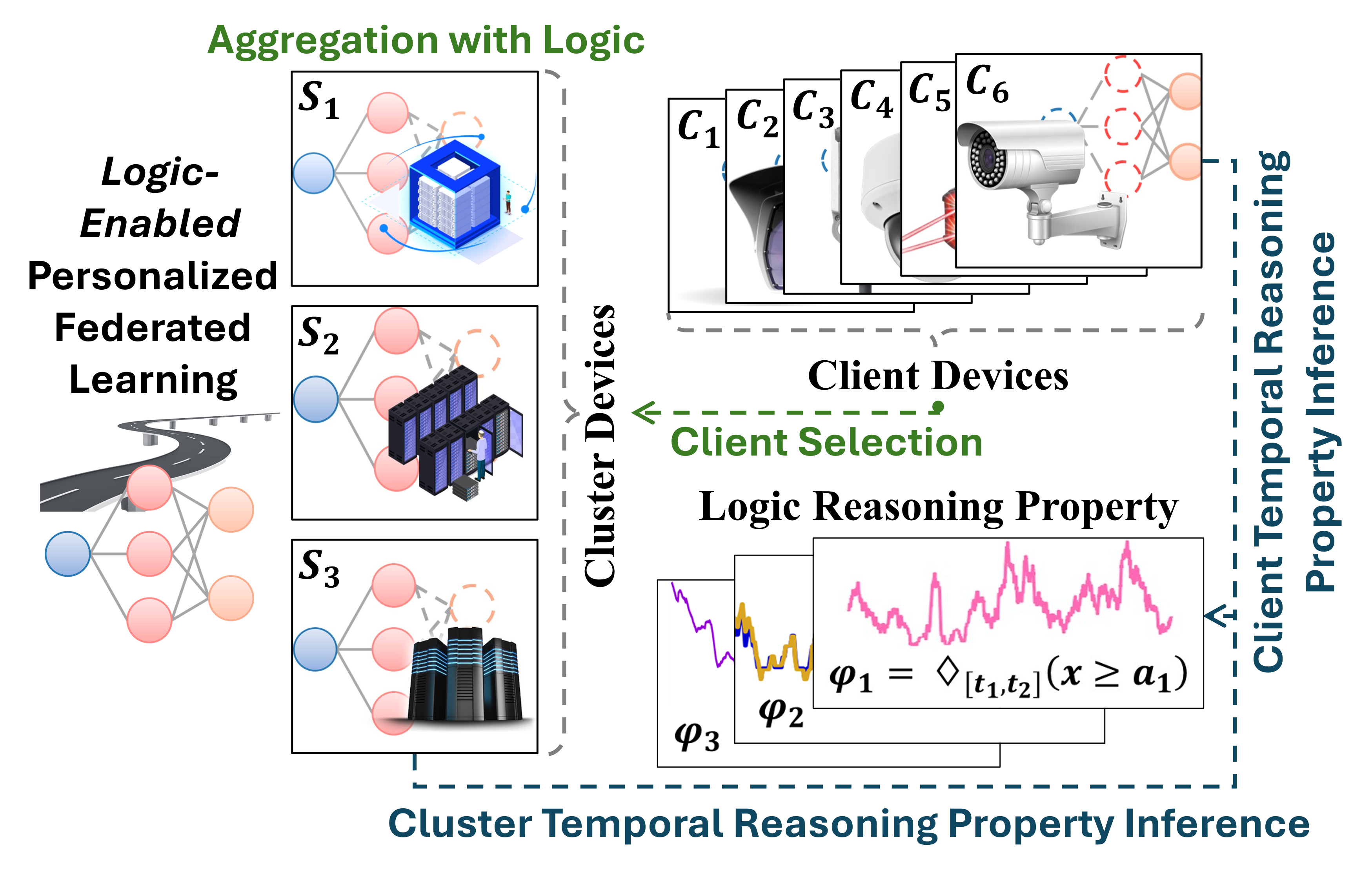
We proposed a federated learning training paradigm, called FedSTL, which enhances personalized client performance by encouraging model predictions to align with automatically inferred temporal logic properties. This approach enables collaboration among clients that share similar symbolic characteristics, improving robustness under heterogeneous and non-IID data distributions.
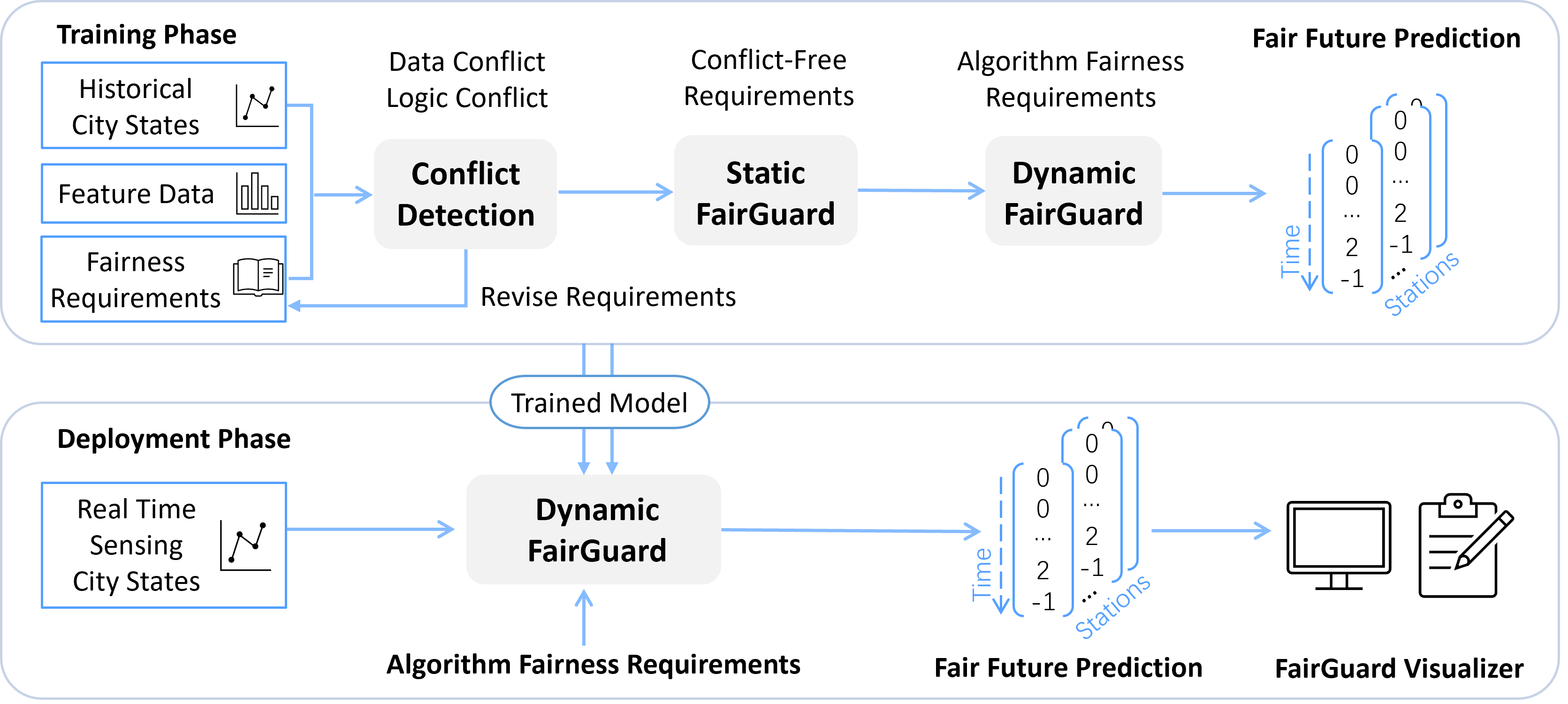
In addition, we incorporated signal temporal logic constraints to guide deep learning predictors toward fairer outputs. In this work, fairness properties related to demographic factors, such as age and median household income, were formally encoded for urban service allocation.
Building upon these contributions, my ongoing research extends the role of formal specifications from post-hoc analysis to a preventative security mechanism for cyber-physical systems. Specifically, I aim to develop a novel deep learning framework that integrates formal specifications into generative and diffusion-based models. This framework is designed to repair compromised or adversarially perturbed inputs by projecting them back onto the logical constraint set before downstream prediction. By embedding specification-driven correction into the learning pipeline, this approach moves beyond post-hoc detection toward proactive security, safety, and fairness guarantees in AI-enabled cyber-physical systems.
Related Publications